Joshua Bossie

The driftwood will remind him about eternity

Category: Uncategorized

  • Feature Friday on a Tuesday: Relationships

    Welcome to another edition of Feature Friday! Yes, I know it’s Tuesday, but “Teacher Tuesday” doesn’t have the same ring to it. Yet again we’re taking a deep dive into one of the many features and systems you can find in Village Monsters

    I unfortunately had to skip last Friday due to putting out my latest demo – thus the delay to Tuesday! – and to celebrate Valentine’s Day I want to dig into the relationship system

    Sorry, buddy, but the answer is “No”. I’m not talking about that kind of relationship.

    Village Monsters is filled with a variety of strange and personable monsters – and even some animated inanimate objects, like Signey here.

    But you cannot date them.

    When I say “relationship” I’m talking purely platonic. Let’s take a look.

    Relationships

    Each day brings something new in Village Monsters, but soon enough you’ll establish a routine: talking to villagers, solving mysteries, participating in events, completing your collection, and much more.

    Nearly every action and activity helps build your relationship with the villagers you find yourself living with. Villagers that view you with distrust or suspicion will slowly thaw over time as you prove yourself to be a respectable member of monster society.

    One important thing to note is that growing relationships is almost entirely passive. There is no “gift” system, at least not like you’d find in Harvest Moon or Stardew Valley.

    I never want relationship building to feel like a chore, and have purposefully made it so that merely experiencing the game is enough to raise your relationships and status.

    Benefits of Good Relations
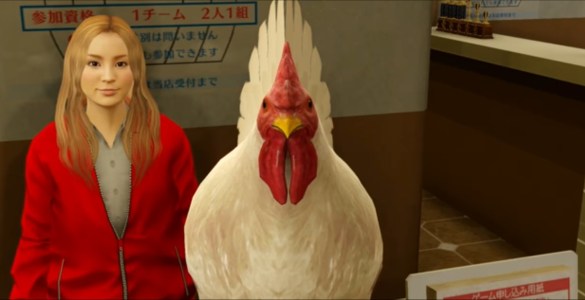
    You’ll probably want to be friends with everyone just because that’s what you do in video games, but there’ll be some tangible benefits as well

    Story

    There are generally two types of stories in Village Monsters – Personal Stories that each villager goes through, and the main story that you’ll slowly unravel through the course of the game.

    Building relationships will be the primary way to advance both types of stories. You’ll develop both trust and reputation with the villagers, and in doing so you’ll be able to explore both their personal lives and the world they live in.

    Don’t worry, though, there’s no risk of missing anything if you want to experience village life slowly. The story can go at a pace you feel comfortable with – building your relationships merely unlock the opportunities to advance it.

    Exploring Buddies

    There’s an entire part of the game that I’ve been pretty quiet on so far, and unfortunately for you I’m going to continue to keep my lips sealed.

    But I will say this: there’s a lot to explore outside the village. You may just be looking to complete your critter collection or find some treasure, but they’ll be plenty of story reasons to go out and adventure.

    If your relationship is high enough with some villagers they may even offer to come along with you. In fact, these villagers will often have special abilities or insight that helps you explore, collect, and unlock special shortcuts.

    Activities, Items and More

    Beyond story and adventure, building friends also has a more practical side – you’ll get gifts! Some villagers may be holding onto exclusive furniture or powerful items that they’ll only entrust to their close friends. Others may have an idea for a new activity or diversion that they’ll consider with your support.

    This area especially will need to evolve over time as the game is developed, so I’ll have more to say on it later.

    Tracking Relationships
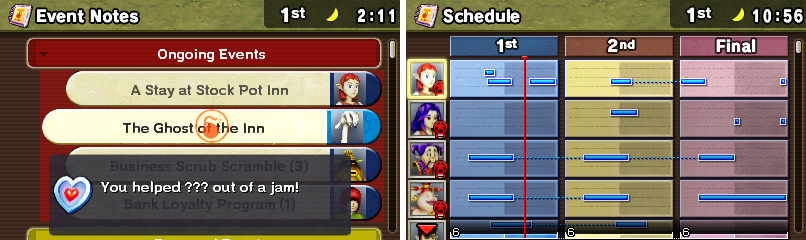
    The Bomber’s Notebook, from LoZ: Majora’s Mask 3D

    While the final amount of villagers is still in flux, I can tell you that this isn’t going to be a small village – you’ll be looking at anywhere between 25 and 40 monster friends to live with. You’re going to need a way to keep track of this all, but how?

    The answer is by keeping careful watch of your handy Compendium. What’s that, you ask? Well, it’s such a big subject that I’ll need to save it for a future Feature Friday, but I can share some ideas with you now.

    Do you remember the Bomber’s Notebook from Majora’s Mask? This handy book served as the primary way to track every townsperson in Clock Town and included their schedule, quest status, and more.

    The Compendium will serve a very similar role in Village Monsters, and it’ll also be the primary way you can track your relationships.

    One thing I really enjoyed about the Bomber’s Notebook is how it evolved over time – nothing was filled out for you, and instead you had to do the legwork to learn people’s schedules and problems.

    Look forward to learning more soon!
  • Sprint 5 – Warming Up – Plan

    The Runnin’ Postman in LoZ: Twilight Princess

    WARMING UP

    Week of February 12th, 2017

    WARP DOGS’ CORP LOGS

    • The state of our WARP CORP continues to hold steady at ~really god damned good~
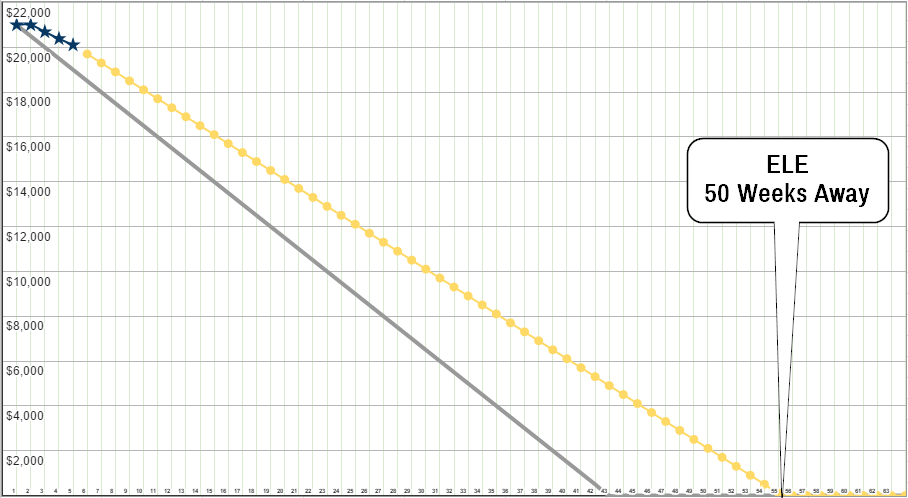
    • The Extinction-Level-Event (ELE) is now ~50 weeks away. Remarkable!

    Longtime readers of the site may be confused as to how the ELE isgrowing instead of shrinking. We all know that I employ a huge team of highly-respected accountants, but shouldn’t the day I run out of money be getting closer instead of further away…?

    The answer is that I’m actually spending far less than the estimates I made months ago. That was pretty intentional – overestimate spending and underestimate income and all that – but it’s pretty cool to see play out

    Once upon a time I thought I’d be lucky to save up 3 months worth of salary to keep going. Now I’m looking at timelines longer than a year. Pretty crazy! But good! Crazy good!

    Gonna keep this post pretty short this week as I’m late putting this up and I got stuff to do!

    SPRINT GOALS

    After a successful release of my 2nd demo I have a lot of feedback to churn through. In general, this week I hope to start putting levels of polish on the various systems in the game, including coming up with the concept of weeks, months, and even years and seasons.

    Past that, it’s soon time to start exploring screens beyond the initial test area. Maybe even the village itself can start growing with time…we’ll have to see!

    Let’s do our best this week.

  • What is – and isn’t – a Were-Release?

    In a few days I’ll be releasing the next Were-Release for my project. This’ll only be my 2nd time doing so, and I think I had just one follower (myself) for the 1st release, so I wanted to take the time to explain about what you can – and can’t – expect out of this.

    In short, a Were-Release is a very early demo of Village Monsters that is released on a monthly basis (the day of the full moon – thus the name!)

    Each Were-Release serves as a snapshot of what the in-development game looks like at that particular point in time. Because it’s based on an arbitrary date, no extraneous work goes into these demos – you won’t find any misleading vertical slices, scripted demos, or any other type of smoke & mirrors.

    Instead, I take the latest stable build I tested and upload it to my site. This allows players who love to watch the evolution of a game’s development experience Village Monsters and provide feedback without a lot of wasted work on my side.

    It’s important to note that a Were-Release is not considered a ‘ship-able product’. You’ll never need to pay or sign up for anything to receive it, but it’s going to be rough, buggy, and things will frequently change from build to build.

    From a feature, visual, and overall ‘feel’ standpoint, each Were-Release version is indicative of the final game: everything you encounter or experience will in the final game in some form.

    However, please do not use these releases to gauge the quality of the final game. I frequently do a lot of experimentation, and certain elements may be bad or plain broken at times. This in no way reflects what you’ll see in the final release.

    I hope as many people as possible can play these early demos, as there’s something really special about seeing a game spring to life over time. However, I also completely understand that some people simply want to wait for a more stable, more polished game – if so, please consider waiting for a different type of release later this year!

    Above all, these releases are meant for feedback. All bugs, feature requests, complaints, and everything else will be read by me and added to the backlog for analysis. I’ll monitor comments and my email address for feedback. You can also catch me on Twitter at @WarpDogs

  • The Village of ???

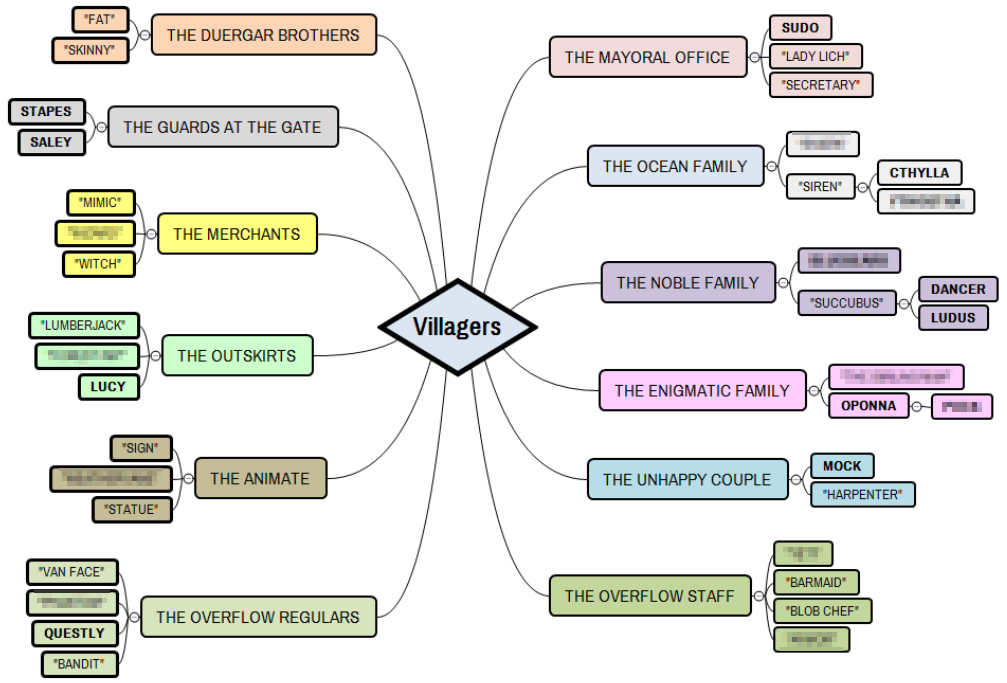
    Did some “worldbuilding” last night, this time fleshing out the village of…uh, unnamed, I guess.

    This part has been without a doubt my favorite.

    Names in bold are mostly final, whereas the unnamed villagers get just a short blurb describing their general idea.

    There’s a lot of them – probably too many. They aren’t all major, and I could afford to make 2-3 cuts to bring it down if needed, but I’m pretty happy with how this looks currently and will be sticking with it for now.

  • Sprint 4 – Snowed In – Plan

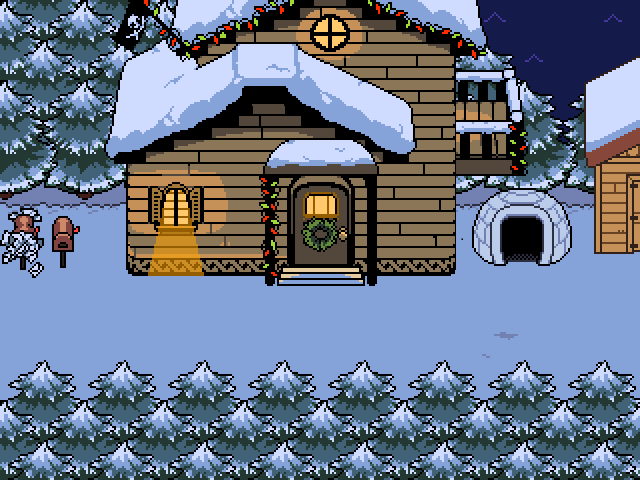
    The wonderfully cozy house of Papyrus, from the equally wonderful Undertale

    SNOWED IN

    Week of February 5th, 2017

    WARP DOGS’ CORP LOGS

    • The state of our WARP CORP continues to hold steady at ~really god damned good~
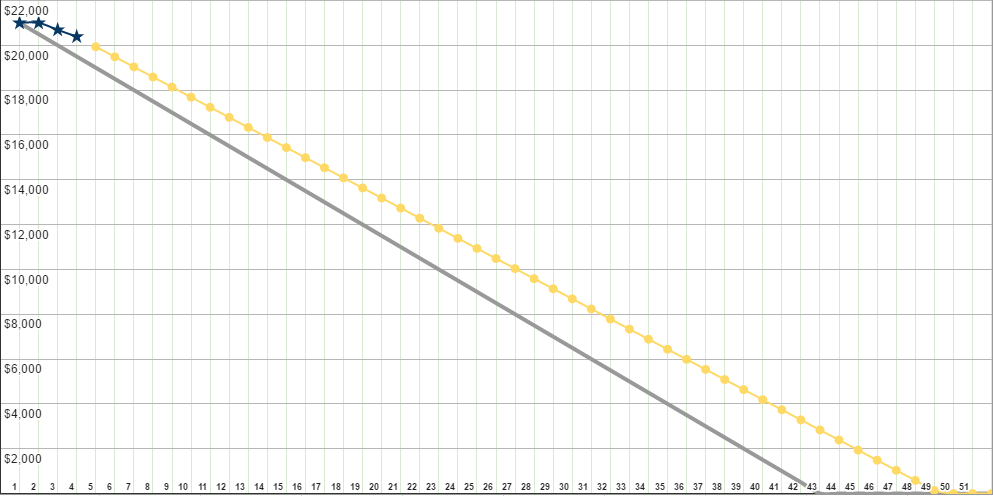
    • The Extinction-Level-Event (ELE) is now ~46 weeks away. Remarkable!

    An errant Comcast payment aside, this was another good week. All my planning and saving is apparently paying off, which is good! Maybe I wasn’t so crazy after all.

    Maybe.

    The end of this week marks the ~1 month mark since I started this venture. At first time went by slowly, but now it’s barreling down the highway as things settle in. There’s a long way to go until I reach the end of wherever this thing is taking me, but it sure feels closer now than it ever has.

    SPRINT GOALS

    Last sprint may have been the first one where I actually laid out what I hoped to achieve and – by god! – I actually did it! Let’s see if I can continue building on that success, however brief.

    A new were-release is out this Friday, and for me that’s going to serve as a great motivator for focusing on tangible content. Last week was great, but it was very technical and very refactor-heavy – it’s fun to work on behind-the-scenes stuff, but it’s only fun for me, not for players.

    Here are some goals that I think are achievable and provide some good bang vs. buck for the upcoming release…

    • Focus on UI elements, especially related to calendars and menus
    • Create little ‘proof of concepts’ of seasonal changes
    • Add the 1st draft run of Overflow, a central location that will be visited throughout the game

    Look forward to a new version to play with by Friday. Who knows – I might deliver you an actual game! Wow!

  • Sprint 3 – The Emerald City – Retrospective

    THE EMERALD CITY

    Week of January 29th, 2017

    OVERVIEW

    This week had some of the highest highs as well as some of the lowest lows.

    On Tuesday I had perhaps my most productive day so far on the technical front, and on Friday I finally reached the summit of Mt. Dialog and implemented that system I had put off for so long.

    But I also spun my wheels a lot. Some days I’d look up and realized that hours had passed without much to show for it.

    This coming sprint ends on a full moon – and with that, a new release. I’m hoping that such a big occasion helps clarify my focus and productivity…if only to avoid being embarrassed by what I eventually put out there for folks to try

    HIGHLIGHTS

    • Solved a nasty FPS drop that was being caused by Vsync. Weird, right?
    • Accomplished a huge goal by designing and finishing a new dialog system
    • Experimented with some ideas related to diversions (like claw machines)
    • Implemented some feedback to reduce clock size, fixed up dog animations, and more
    • Bought a harmonica! More on that later…
    • Fixed our vacuum by splicing together a new plug – hey, it counts!!
    • Started adding layers of ‘flavor’ in the form of random birds that fly by
    • A lot of major and much-needed refactoring & improvements to the inventory, clock, and popup notice systems
    • Created a proof a concept for world map viewing, panning, and zooming

    LOWLIGHTS

    • More than a few wasted days
    • Refactoring is pleasing from a problem solving standpoint, but I’m not exactly moving ‘forward’ when I do it. I should try to minimize the amount of rework to systems I’m doing

    SHOW & TELL

  • Feature Friday: An early look at dialog

    Welcome to another edition of Feature Friday! Yet again we’re taking a deep dive into one of the many features and systems you can find in Village Monsters

    Today, I’m going to talk about  how conversing and dialog will work. Let’s take a look.


    You’re going to be doing a lot of talking in Village Monsters. There will be villagers to build relationships with, merchants to barter with, and lore to be learned around every corner.

    The actual text itself is of course important, but even more so than that is the delivery. How text and dialog is presented to the player is of utmost importance to how the world is shaped in their head.

    In this post I’m going to focus on two specific strategies for communicating dialog with the player: The use of portraits, and the use of narrator text intermixed with dialog.

    Robust Portraits

    I probably don’t need to tell you that my professional background isn’t in art. It’s, uh…it’s rather self-evident, right?

    sorry

    While I may be unable to animate an entire sets of sprite to communicate what’s going on in a scene, I should have enough talent to handle portraits. As such, this is going to be a major focus of my time and effort when it comes to producing art for this game.

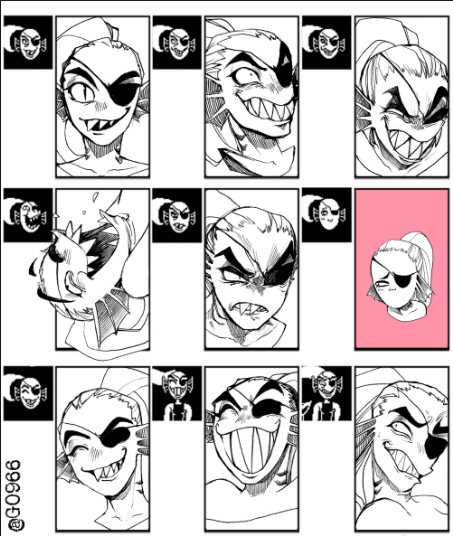
    By way of example, I want to talk about the wonderful Undertale. Like me, Toby Fox isn’t exactly an artist,

    sorry, toby

    but he uses an impeccable style and design to bring his characters to life. One of the many ways he accomplishes this is via his liberal use of character portraits.

    Take a look of this list of Undyne expressions next to “artist interpretations”, by Tumblr user g0966

    It doesn’t take much to communicate a wide range of emotions and personality of a character when making a portrait. There’s nothing in the way of animation here; it’s just purely good design. It’s a wonderful bang-for-your-buck approach that non-artists like me can use to make the most of our time.

    It’s too early to share something of my own that’s the same level of quality, but here’s one little guy I’ve been working on – codenamed Signey

    More on this guy later on in this post.

    Narrator Text

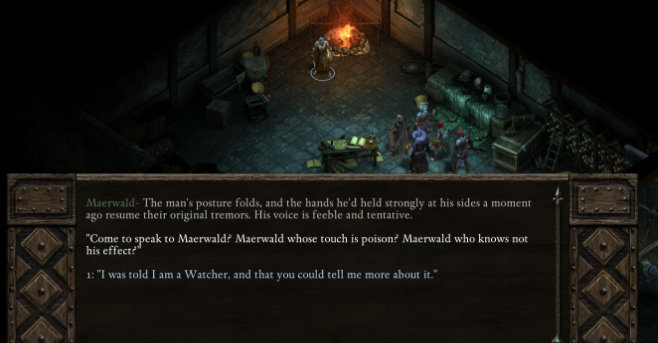
    Next up, I wanted to explain the usage of what I’m calling narrator text. Let’s use another example, this time with Obsidian’s excellent CRPG, Pillars of Eternity.

    You can tell Obsidian was trying to make the most of their money and work within their own limitations. Like the Infinity Engine games before it, one of Pillars biggest limitations is its small animation set – you have your walking, fighting, and magic casting, but not much else.

    Nearly every non-combat encounter with an NPC is them standing in an idle animation – no gestures, moving faces, or other animations are there to give them life.

    Their solution to this was brilliant: they use narrator text intermixed with dialog to help paint the scene.

    I think this is a genius. Without animating a single frame you can picture Maerwald as a frail and terrified old man who is likely losing his mind.

    Pillars is a big, epic, D&D-style RPG, and its narrator text reflects this, going so far as being on the same caliber in style and volume to a fantasy novel

    Frankly, Village Monsters is simply not that, so there will be some key differences. Notably, sentences will be shorter and much less descriptive overall.

    Here’s an example of what it looks like in my game:

    The above GIF actually shows what it looks like to combine both a portrait and narrator text to communicate with the player.

    I have a lot of plans for narrator text in this game. For one, the narrator won’t be some detached voice – it’ll be its own personality and have its own opinions on what’s going on.

    Bastion had a narrator that was dripping with personality

    I’m also going to use it communicate other things beyond dialog to the player. For example, in most RPGs when a character is “done” talking they’ll just loop what they said last.

    In Village Monsters, I can instead let the narrator do the talking. Instead of repeating themselves, I can instead use narrator text to tell the player something like, “I don’t think this character has anything more to say”, or “The villager looks at you kindly before returning to work”. Same effect, but in a way that’s a bit more effective than repeating text.

    Summarized in a different way, narrator text will be yet another method to inject some flavor into what is hopefully a delicious meal.

    Talking Back

    One area I’m not quite ready to talk about is the ability to talk back to villagers. Instead, I’ll talk a little about my philosophy.

    Most important to me: your character won’t ever have any lines of its own.

    This is a very deliberate choice for the style of game I’m going for. Consider the below two possible ways for a character to accept a quest:

    • With a Voice: “Sure, I’d be happy to help look for your cat, Mrs. Seymour”
    • Without a Voice: You agree to help find the cat.

    The 2nd option is without a doubt drier than the 1st, but this is intentional. I want you, the player, to project your own vision onto the character. Would your version of the character say “happy to help”? Would they be so formal in addressing a person by their last name? Maybe, maybe not, but I want it to be up to you.

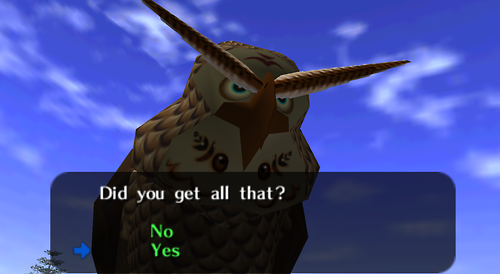
    Nintendo is infamous for using this ‘excuse’ for explaining why Link doesn’t talk in any of the Legend of Zelda games, but I think it’s a smart and ultimately correct strategy. You are the player – this should be true in all aspects, even speech.

    Despite this, there will be plenty of ways to ‘talk’ without just saying yes or no. More to come on that, and much more, in the coming weeks.